Lasting Impact
Not every wound leaves a visible scar. Some injuries remain hidden beneath the surface, affecting lives long after the physical pain has faded. At DIHAN Foundation, we believe that mental and emotional wellbeing is just as important as physical recovery. Following the events of July 2024, thousands of individuals faced challenges that could not be seen with the naked eye—trauma, anxiety, grief, fear, and emotional distress that continued long after the headlines disappeared. Our mission is to ensure that no survivor is left to face these struggles alone. Through free psychosocial support services, community-based mental health initiatives, and long-term rehabilitation programs, we work to restore hope, resilience, and dignity for those affected. We partner with communities, mental health professionals, and local support networks to create safe spaces where people can speak, heal, and rebuild their lives. Whether someone is recovering from a traumatic event, coping with loss, or struggling with emotional burdens that others cannot see, we are committed to standing beside them every step of the way. Because true recovery is not only about healing the body—it is about healing the mind, restoring confidence, and empowering individuals to move forward with strength and hope. At DIHAN Foundation, we remain dedicated to building a Bangladesh where mental health care is accessible, compassionate, and available to everyone who needs it. Every person deserves the opportunity to heal, recover, and live a life filled with purpose and possibility. The wounds you cannot see are still wounds. And every wound deserves care.
Where Our Mental Health Journey Began
- In July 2024, while treating injured survivors during one of Bangladesh's most difficult moments, DIHAN Foundation's Director and Co-Founder, Nusrat Jahan Monne, noticed something that medical records could not capture. The physical wounds were healing, but many of the young survivors were not recovering. Some sat in complete silence. Others lost their appetite, avoided conversations, or became frightened by sounds that reminded them of what they had experienced. Many struggled to sleep. Some withdrew from their families and friends entirely. Their bodies were healing, yet the emotional scars remained untouched. As Nusrat worked alongside patients and families, one question continued to return: "We were treating the wounds we could see. But what about the wounds we could not see? These young people witnessed experiences that no one should ever have to endure. When the bandages came off, they were sent home as if their recovery was complete. But for many of them, the real struggle was only beginning." That realization became more than an observation. It became a responsibility. What started as a concern for a group of survivors grew into a long-term commitment to mental health, psychosocial support, and emotional recovery. DIHAN Foundation recognised that healing must go beyond physical treatment and include the psychological support necessary for individuals to rebuild their lives with dignity, confidence, and hope. Today, that commitment continues to guide our work. We remain dedicated to ensuring that every survivor of July 2024—and every vulnerable person carrying an invisible burden—has access to compassionate, community-based mental health care and the support they deserve. Because true recovery is not only about surviving. It is about healing, rebuilding, and moving forward.
The Invisible Mental Health Emergencys
Bangladesh is facing a mental health crisis of extraordinary scale—one that existed long before July 2024 and has been made significantly worse by the events that followed. Millions of people across the country live with mental health challenges, yet only a very small fraction ever receive professional support. Access to mental health services remains extremely limited, particularly in rural and underserved communities where resources are scarce and awareness is low. For many individuals and families, help is simply unavailable. Yet the greatest barrier is not only a lack of services. It is silence. Mental illness is still widely misunderstood and heavily stigmatized. Many people are afraid to speak about their struggles, fearing judgment, discrimination, or social exclusion. Families often hide emotional suffering rather than seek support, leaving countless individuals to carry their burdens alone. What should be treated as a health issue is too often viewed as a source of shame. The consequences are devastating. People who need support are not identified. Conditions that could be treated are ignored. Emotional pain grows into long-term psychological distress, affecting individuals, families, and entire communities. The events of July 2024 intensified this crisis. Thousands of people witnessed violence, experienced profound loss, suffered serious injuries, and endured traumatic experiences that can leave lasting psychological effects. While physical wounds may heal, emotional trauma often remains long after the visible signs have disappeared. Without proper support, trauma can evolve into depression, anxiety, chronic stress, social isolation, and other serious mental health conditions. Recovery becomes more difficult, opportunities are lost, and lives are profoundly affected. At DIHAN Foundation, we believe mental health care is not a luxury—it is a necessity. Every person deserves access to compassionate support, professional care, and the opportunity to heal with dignity. Addressing this crisis requires more than awareness; it requires action, investment, and a commitment to ensuring that no one is left behind simply because their suffering cannot be seen. The crisis may be invisible, but its impact is felt by millions. And it can no longer be ignored.
The Communities Carrying the Heaviest Burden
Mental health challenges do not affect everyone equally. Across Bangladesh, some communities face significantly greater risks due to poverty, discrimination, violence, and limited access to support services. These individuals often carry the heaviest psychological burdens while having the fewest opportunities to receive help. Women and Girls Women and girls across Bangladesh continue to face gender-based violence, domestic abuse, child marriage, economic dependency, and social discrimination. These challenges create a constant psychological strain that can lead to depression, anxiety, trauma, and emotional distress. Yet countless women suffer in silence. Many never receive a diagnosis, never access professional support, and never learn that the emotional pain they are experiencing is both real and treatable. Cultural stigma and limited access to care often leave women to navigate these challenges alone, despite their profound impact on health, wellbeing, and quality of life. Children and Adolescents For children and young people, exposure to violence, poverty, displacement, family instability, and loss can have lifelong consequences. The emotional wounds experienced during childhood often shape educational outcomes, relationships, confidence, and future opportunities. Many children who have witnessed traumatic events continue to struggle long after the immediate crisis has passed. Without early intervention and psychosocial support, these experiences can affect their development, wellbeing, and ability to reach their full potential. Poverty and Mental Health Poverty and mental health are deeply interconnected. Families living with food insecurity, unemployment, debt, displacement, and social instability face daily pressures that significantly increase the risk of mental health challenges. For millions of people, survival concerns leave little room to seek emotional support or professional care. In many underserved communities, mental health services are unavailable, inaccessible, or simply unknown. As a result, psychological suffering often remains untreated, creating cycles of hardship that can persist for generations. At DIHAN Foundation, we recognise that mental health support must reach those who need it most. Our work focuses on ensuring that vulnerable women, children, adolescents, and underserved communities have access to compassionate care, psychosocial support, and opportunities to heal, recover, and build brighter futures. Because no one should be left behind simply because their struggle is invisible.
A Story of Survival and Recovery
The following story is based on the real experiences of individuals supported by DIHAN Foundation following the events of July 2024. Personal details have been changed to protect privacy and dignity. He was just 23 years old—a university student with dreams, ambitions, and an entire future ahead of him. Unlike many others, he survived July 2024 without any visible physical injuries. There were no bullet wounds, no broken bones, and nothing that medical reports could record. To the outside world, he appeared unharmed. But what no report could document was what he had witnessed. He watched his closest friend lose his life beside him. He held him in his arms, powerless to change what was happening. And when it was over, he walked home carrying a burden that no one could see. The weeks turned into months. He stopped attending university. He stopped answering calls from friends. He rarely left his room. Conversations became shorter. Days became quieter. His family watched him withdraw further into isolation, unsure of how to help or even how to describe what was happening. His mother told neighbours that her son was unwell. She spoke of illness, but not the kind that could be diagnosed with a scan or treated with medicine. There seemed to be no words that felt safe enough to explain the pain he was carrying. Everything began to change when a DIHAN Foundation community outreach volunteer visited his neighbourhood and met with his family. His mother cried—not because her son's condition had worsened, but because for the first time in months, someone had come simply to ask how he was doing. Someone listened. Someone understood. Someone recognised that healing is not only physical. Today, he is receiving structured psychosocial support through DIHAN Foundation. He has begun speaking about his experiences. He has started reconnecting with the world around him. He is taking small but meaningful steps toward rebuilding his life. His journey is far from over. Recovery takes time. Healing is not linear. Some wounds cannot be seen, and some stories cannot be forgotten overnight. But today, he has something he did not have before: Support. Hope. And a path forward. At DIHAN Foundation, we believe that every survivor deserves the opportunity not only to survive, but to heal, recover, and reclaim their future.
Building the Future of Mental Health in Bangladesh
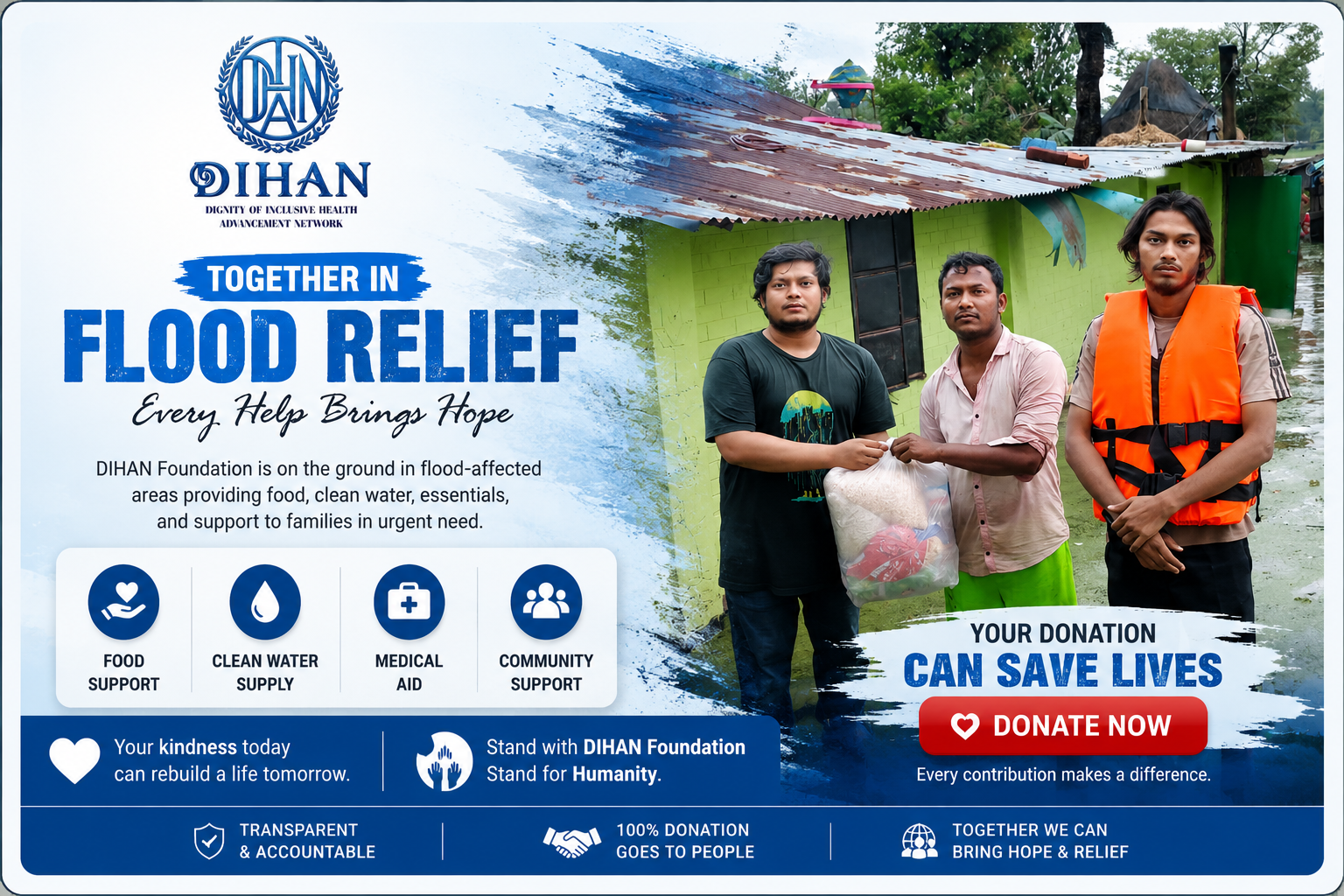
DIHAN Foundation believes that mental health support must extend beyond immediate intervention. Our vision is to help create a future where every person in Bangladesh can access compassionate mental health care, regardless of where they live, their income, or their circumstances. Achieving this vision requires long-term commitment, innovation, and systemic change. We are working to build sustainable solutions that strengthen communities, improve access to care, and ensure that mental health becomes a national priority. Suicide Prevention Mental health crises often occur in silence, leaving individuals and families without the support they urgently need. DIHAN Foundation is developing community-based suicide prevention initiatives that focus on early identification, crisis response, and safe referral pathways. By training community members, strengthening local support networks, and improving access to professional care, we aim to ensure that people facing their most difficult moments are not left alone. Climate and Disaster Mental Health Climate-related disasters continue to affect millions of people across Bangladesh. Floods, cyclones, river erosion, and displacement not only damage homes and livelihoods but also leave deep psychological impacts on individuals and communities. DIHAN Foundation is working to integrate mental health and psychosocial support into disaster response efforts, ensuring that emotional recovery becomes a core part of humanitarian assistance. We believe communities should receive psychological support from the very beginning of an emergency, not as an afterthought. National Policy Advocacy Lasting progress requires more than individual programmes—it requires systemic reform. DIHAN Foundation is committed to supporting policies that expand access to mental health services, strengthen community-based care, improve public awareness, and protect the rights and dignity of people living with mental health conditions. We envision a Bangladesh where mental health is recognised as an essential part of public health, where support is accessible to all, and where no one is excluded from care because of stigma, geography, or economic hardship. Looking Forward The challenges are significant, but so is the opportunity for change. By investing in prevention, community support, disaster response, and policy reform, we can help build a future where mental wellbeing is protected, supported, and valued across every community in Bangladesh. At DIHAN Foundation, our commitment is simple: to create a future where no one has to face mental health challenges alone, and where every person has the opportunity to heal, thrive, and build a better tomorrow.
Measuring the Need, Defining the Future
Our Numbers: Behind every statistic is a human story, a family, and a future that deserves support. More than 16 million people in Bangladesh are estimated to be living with untreated mental health conditions, yet fewer than 1% currently receive any form of professional care. Access to mental health services remains critically limited, with approximately 0.07 psychiatrists available for every 100,000 people—one of the lowest rates globally. The events of July 2024 further exposed the urgent need for accessible psychosocial support. Across all 64 districts of Bangladesh, thousands of survivors experienced trauma, loss, and psychological distress that continue to affect their daily lives. Despite the scale of the challenge, Bangladesh still lacks a national suicide prevention strategy, leaving many vulnerable individuals without the coordinated support systems they need during times of crisis. These numbers do not simply represent a public health challenge. They represent millions of lives waiting for understanding, support, and hope. Our Standards Every mental health initiative delivered by DIHAN Foundation is guided by internationally recognised humanitarian, public health, and psychosocial support frameworks. Our programmes align with global best practices, including the United Nations Sustainable Development Goals, the WHO Mental Health Action Plan, international Mental Health and Psychosocial Support (MHPSS) guidelines, humanitarian protection standards, and child-focused psychosocial care frameworks. This commitment ensures that every intervention is ethical, evidence-based, community-centred, and designed to create lasting impact for individuals and families across Bangladesh. Our Promise The young man who spent months isolated in his room is still healing. His journey is not over. Recovery takes time, patience, and support. Yet today, he is taking steps forward that once felt impossible. His story reflects the reality faced by countless survivors across Bangladesh—people carrying invisible wounds that deserve the same care and attention as any physical injury. DIHAN Foundation will continue working until every survivor of July 2024 has access to the psychological support and mental health services they need to rebuild their lives with dignity and hope. Our commitment extends beyond a single event. We are working toward a future where every Bangladeshi living with emotional pain, trauma, anxiety, or psychological distress knows that help exists, support is available, and they do not have to face their struggles alone. Because rebuilding Bangladesh is not only about rebuilding roads, schools, homes, and institutions. It is about rebuilding people. It is about restoring hope, strengthening communities, and ensuring that healing reaches every person—inside and out.