
CLIMATE RESILIENCE & ENVIRONMENT

Bangladesh Is on the Frontline of a Crisis It Did Not Create. DIHAN Foundation Is Here to Help It Survive.

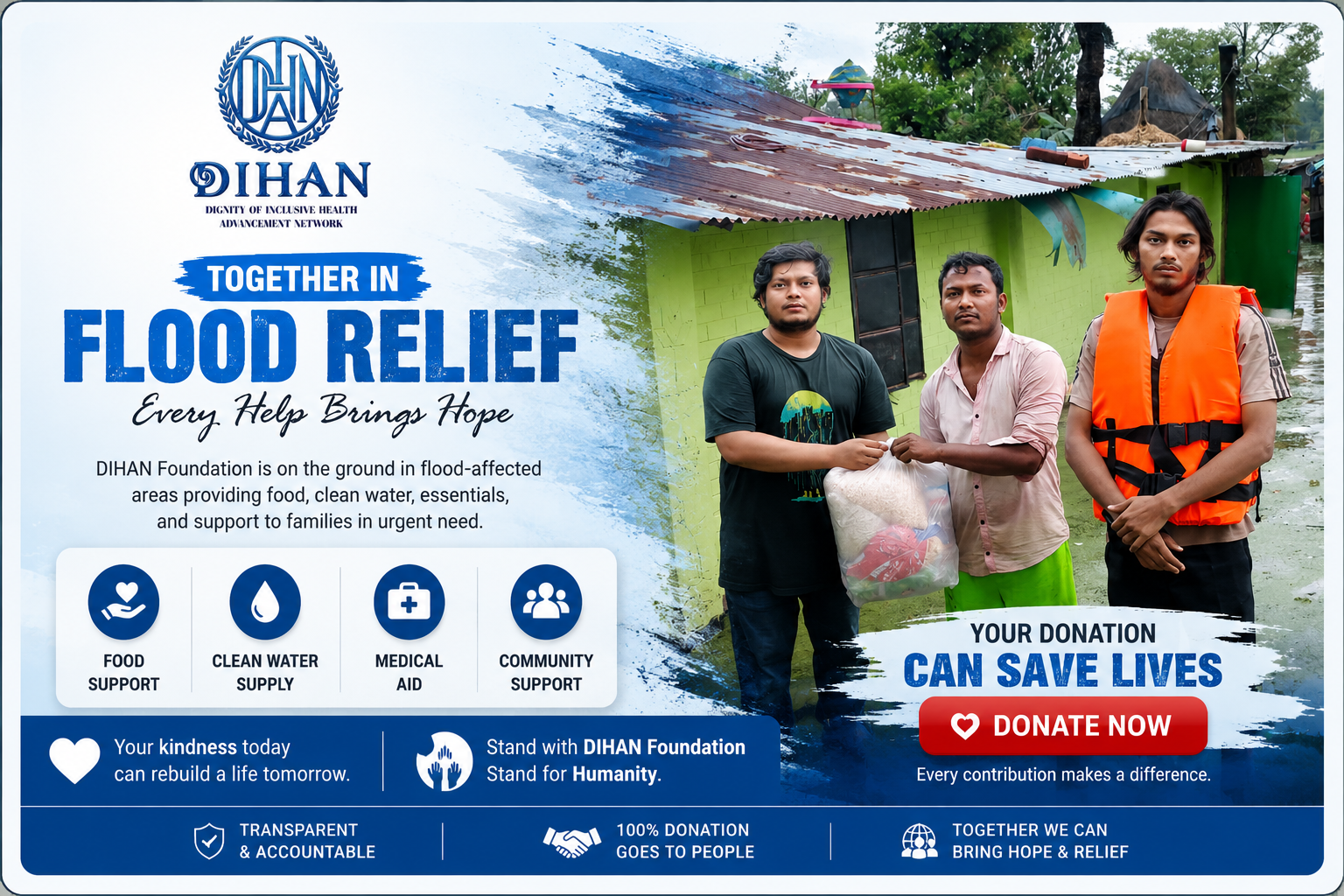
DIHAN Foundation delivers community-based climate resilience, environmental protection, and disaster preparedness programmes across Bangladesh, supporting coastal families losing land to rising seas, haor communities whose harvests are destroyed by flash floods, char land families living on disappearing river islands, indigenous communities in the Chittagong Hill Tracts, and every Bangladeshi whose life is being disrupted by a crisis they did not create and cannot escape.

Coastal Communities

Climate Adaptation

Flood Preparedness

Emergency Response

Environmental Protection

Community Action
CLIMATE CRISIS IN BANGLADESH

The Most Climate-Vulnerable Country on Earth

Bangladesh did not cause climate change. It is paying for it more than almost any nation on earth.

The IPCC ranks Bangladesh among the five most climate-vulnerable countries in the world. Rising sea levels, intensifying cyclones, erratic monsoons, increasing temperatures, and environmental degradation are not future threats for Bangladesh. They are present realities affecting lives, livelihoods, and communities across the country every day.

70%

Flood Risk

In severe years, up to 70% of Bangladesh can be submerged, damaging homes, crops, infrastructure and water supplies.

20 Million

People at Risk of Displacement

Rising sea levels could permanently displace around 20 million people by 2050.

10,000 Hectares

Land Lost Annually

River erosion destroys approximately 10,000 hectares of land every year.

2.5 Million+

Affected by Cyclone Amphan

Extreme weather events continue to impact millions of Bangladeshis every year.

Millions

Climate Migrants

Floods, cyclones and erosion force millions to move from their homes every year.

<0.5%

Global Emissions

Bangladesh contributes less than 0.5% of global greenhouse gas emissions despite facing some of the worst impacts.

The Reality Facing Bangladesh

One-third of Bangladesh experiences flooding every year. Coastal communities face increasing saltwater intrusion, farmers struggle with unpredictable rainfall and declining harvests, and entire villages disappear due to river erosion.

Cyclones are becoming stronger, sea levels continue to rise, and environmental degradation is accelerating. Communities that have contributed almost nothing to global emissions are carrying one of the heaviest burdens of climate change.

Bangladesh contributes less than 0.5% of global greenhouse gas emissions, yet remains one of the countries most exposed to climate-related disasters and displacement.

๐ŸŒŠ Climate & Environment

The Coastal Belt โ€” Where the Sea Is Winning

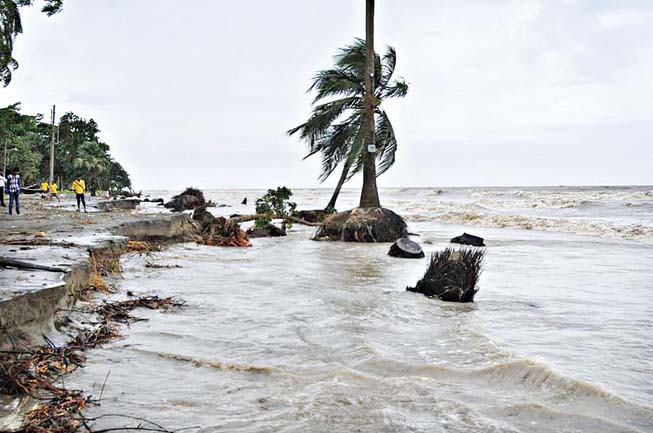
The coastal communities of Bangladesh's southwest, including Satkhira, Khulna, Bagerhat, Barguna, and Patuakhali, sit at the edge of the Sundarbans, the world's largest mangrove forest and Bangladesh's most important natural defence against cyclones and rising sea levels.

For generations, these communities have lived alongside water. Today, however, the water itself is changing. Rising sea levels, stronger cyclones, and increasingly fragile embankments are placing entire communities under constant pressure.

Saltwater intrusion is moving further inland every year, damaging agricultural land that families have relied upon for generations. At the same time, the Sundarbans ecosystem faces growing threats from deforestation, pollution, and climate-driven environmental changes.

Families across coastal Bangladesh are not preparing for a future crisis. They are already living through one. Every day they must decide whether to remain on land that is becoming harder to inhabit or migrate to overcrowded cities where opportunities are uncertain.
Source: IUCN Bangladesh, Climate Change and Coastal Vulnerability Reports
Bangladesh Coastal Communities
Climate Vulnerability

Communities on the Frontline of Climate Change

Across Bangladesh, entire communities are facing climate impacts that threaten their homes, livelihoods, food security, and future generations.
Haor Wetlands

The Haor Wetlands โ€” Where Flash Floods Erase Everything

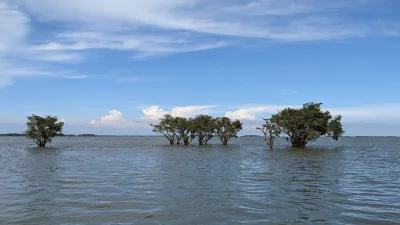
The haor regions of Sylhet and Sunamganj are among Bangladesh's most unique wetland ecosystems. Millions of people depend on a delicate balance of rainfall, river flow, and seasonal flooding.

Climate change is disrupting that balance. Flash floods now arrive weeks earlier than expected, destroying crops before harvest. Entire farming communities can lose a full year's income in just a few days.

For haor families, climate change is not a future threat. It determines whether they have enough food, income, and security to survive.
Source: FAO Bangladesh, UNDP Bangladesh
Char Lands

The Char Lands โ€” Where the Ground Disappears

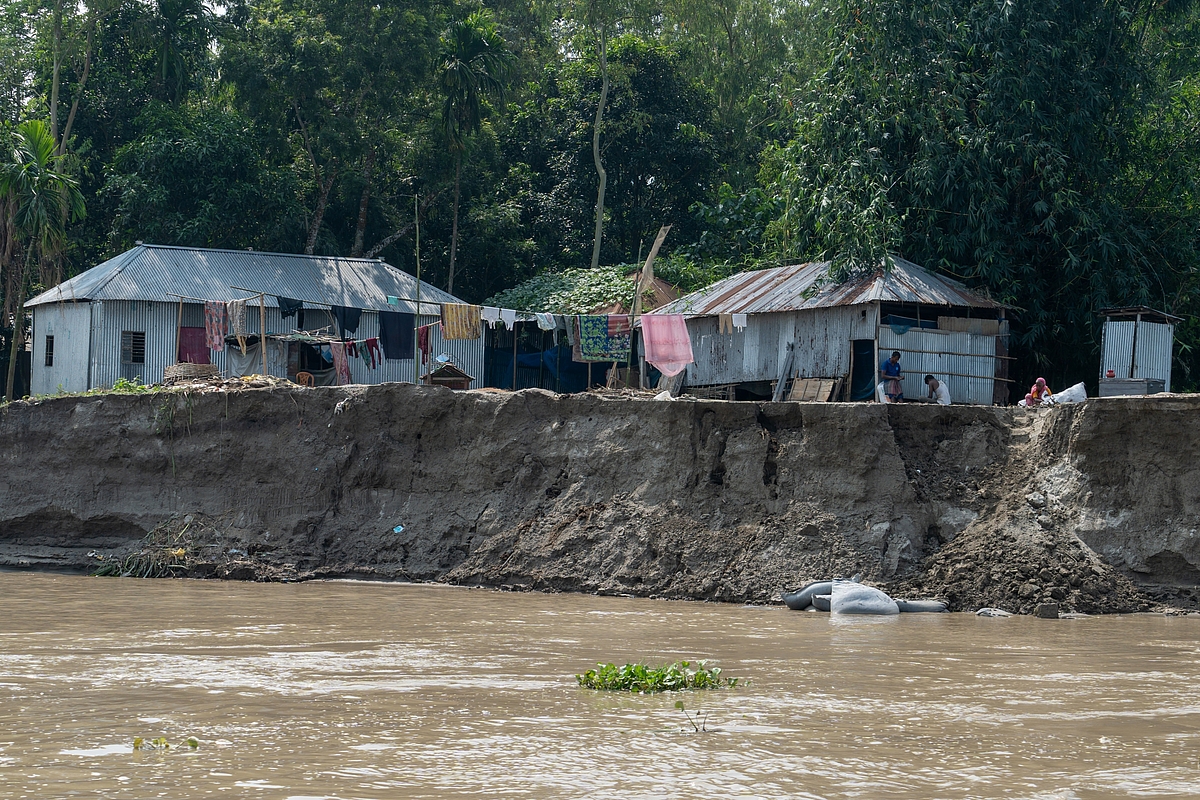
The char lands are river islands formed by silt deposits that constantly appear, shift, and disappear. Millions of Bangladeshis live on land that may not exist a decade from now.

These communities face severe isolation, limited access to services, and constant displacement caused by river erosion and changing waterways.

Families are often forced to rebuild their homes multiple times in a single generation, losing land, livelihoods, and stability each time the river changes.
Source: UNDP Char Livelihood Programme, World Bank Bangladesh
Chittagong Hill Tracts

The Chittagong Hill Tracts โ€” Where Deforestation and Disaster Converge

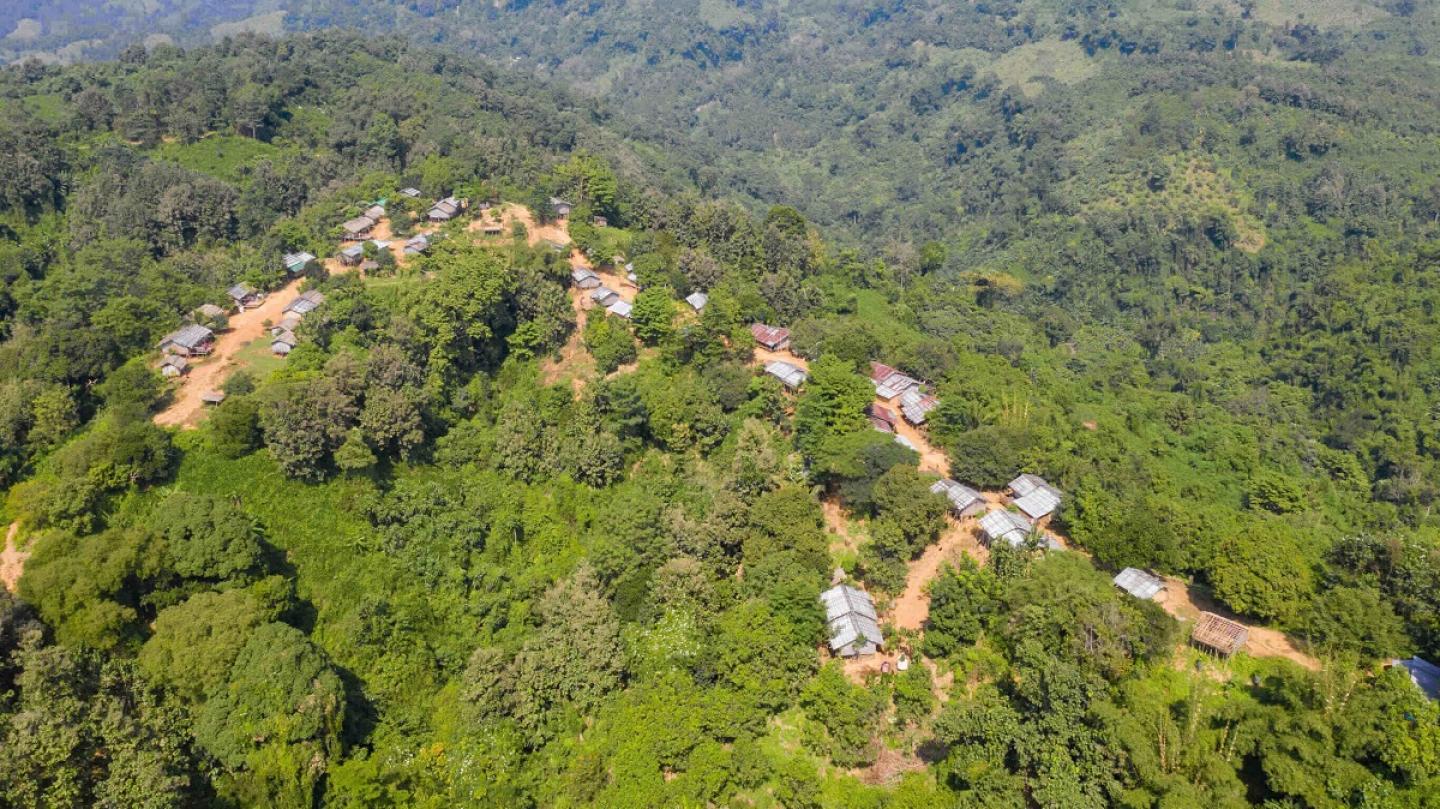
The Chittagong Hill Tracts face an environmental and humanitarian crisis driven by deforestation, land degradation, and increasingly severe rainfall patterns.

Forest loss has destabilised hillsides, making deadly landslides more frequent. Entire communities remain exposed to disasters that continue to grow in scale.

Indigenous communities bear the heaviest burden, facing threats to their land, culture, livelihoods, and long-term security.
Source: UNDP Bangladesh, Chittagong Hill Tracts Commission
REAL COMMUNITIES

A Community Across Four Frontlines

The following accounts are based on real documented climate disaster cases recorded by UNDP, UNHCR, ActionAid, and the Internal Displacement Monitoring Centre. These stories represent millions of Bangladeshis living on the frontline of climate change.

๐ŸŒŠ

Satkhira Coast

Farmer Rahim has watched the land his grandfather farmed turn white with salt. The last three harvests have failed. His youngest daughter developed a skin condition from contaminated drinking water. Today, he faces an impossible choice: stay and struggle, or leave the only home his family has ever known.

๐ŸŒพ

Sunamganj Haor

A family in the haor wetlands harvested their rice three weeks too late. The flood arrived before the harvest was finished. They lost an entire year's income in days. Forced to borrow money to survive, they planted again knowing the same disaster could strike next season.

๐Ÿ๏ธ

Jamuna Char Island

Fatema, a widow, has been displaced four times in twelve years. Every time the river swallowed her home, she rebuilt with fewer possessions and fewer resources. She no longer plants fruit trees because she believes she will not remain on the same land long enough to see them grow.

โ›ฐ๏ธ

Rangamati Hills

An indigenous family watched the hillside above their home collapse during the 2017 landslides. Their neighbours died. They rebuilt lower down the hill, knowing it is also unsafe, simply because there is nowhere else to go.

OUR PROGRAMMES

Climate Resilience & Environmental Protection Programmes

DIHAN Foundation delivers climate resilience, environmental protection, disaster preparedness, and adaptation programmes across Bangladesh's most climate-vulnerable communities.

๐ŸŒŠ

Coastal Community Climate Resilience

Strengthening preparedness systems, adaptation planning, and locally-led resilience strategies.

๐ŸŒ€

Cyclone Preparedness & Early Warning

Community warning networks, evacuation planning and emergency preparedness.

๐ŸŒณ

Mangrove & Sundarbans Protection

Supporting mangrove restoration and environmental protection programmes.

๐ŸŒง๏ธ

Haor Flash Flood Preparedness

Early warning systems and climate-smart farming support in flood-prone regions.

๐Ÿ๏ธ

Char Land Community Support

Support for erosion-displaced families and resilience building in char areas.

โ›ฐ๏ธ

Chittagong Hill Tracts Programme

Environmental protection, indigenous community support and reforestation.

๐ŸŒพ

Climate-Resilient Agriculture

Salt-tolerant crops, flood-resistant cultivation and livelihood diversification.

๐Ÿ 

River Erosion Response

Emergency welfare support and advocacy for displaced families.

๐Ÿ™๏ธ

Climate-Displaced Communities

Livelihood support and protection programmes for urban climate migrants.

๐Ÿ’ง

Environmental Health & Clean Water

Safe water, sanitation and disease prevention initiatives.

๐Ÿ‘ฉ

Women & Climate

Ensuring women lead and participate in resilience and adaptation programmes.

๐Ÿ“š

Climate Education & Awareness

Building community understanding of climate risks and adaptation strategies.

โš– Climate Justice Advocacy

Bangladesh contributes less than 0.5% of global greenhouse gas emissions, yet faces some of the world's most severe climate impacts. DIHAN Foundation advocates for climate justice, adaptation funding, and support for vulnerable communities.

Our Numbers

Top 5

Most climate-vulnerable countries globally (IPCC)

17%

Of Bangladesh's land area at risk of permanent submersion by 2050 (World Bank)

20M+

People facing climate displacement by 2050 (World Bank)

10,000

Hectares lost to river erosion every year (BWDB)

70%

Of Bangladesh can flood in severe monsoon years (UNDP)

2.5M+

People affected by Cyclone Amphan alone in 2020 (OCHA)

150+

People killed in Chittagong Hill Tracts landslides in 2017 alone (UNDP)

4

Distinct climate frontlines covered by DIHAN programmes

64

Districts covered by DIHAN climate outreach networks

Our Promise

Rahim is still watching his land turn white with salt.

Fatema is still rebuilding on ground she knows may not hold.

The family above Rangamati is still living on a hillside they know is not safe.

They did not cause this crisis. But they are paying for it with everything they have, everything they have built, and everything they hoped to pass to their children.

DIHAN Foundation will not stop until the communities most exposed to climate change in Bangladesh have the resilience, resources, and support they need to survive it, adapt to it, and ultimately build lives that no flood, no cyclone, no rising sea, and no collapsing hillside can take away.

Because climate justice is not simply an environmental issue. It is a human rights issue. And every person in Bangladesh has the right to a future on their own land.

Their Fight. Our Foundation.