Water and Sanitation

Hero Image

Water Is Not a Luxury.
It Is Life.

And Millions of Bangladeshis Are Being Denied It.

DIHAN Foundation delivers clean water access, arsenic response, sanitation improvement, and community hygiene programmes across Bangladesh.

For the rural families drinking water that is slowly poisoning them, for the coastal communities whose fresh water has been replaced by salt, for the char land families with no clean water source of any kind, for the urban slum communities sharing contaminated water with hundreds of families, and for every Bangladeshi for whom the simple act of drinking a glass of water carries a hidden cost that no human being should ever have to pay.
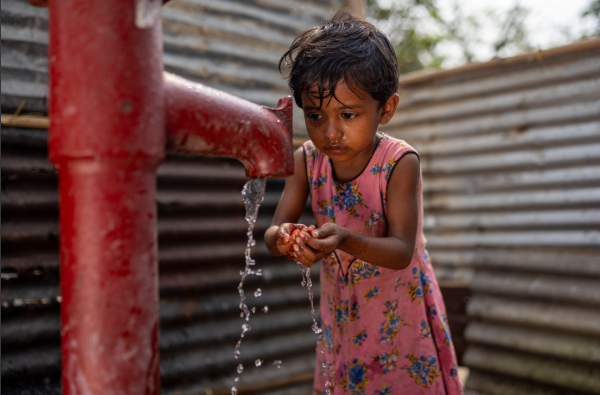
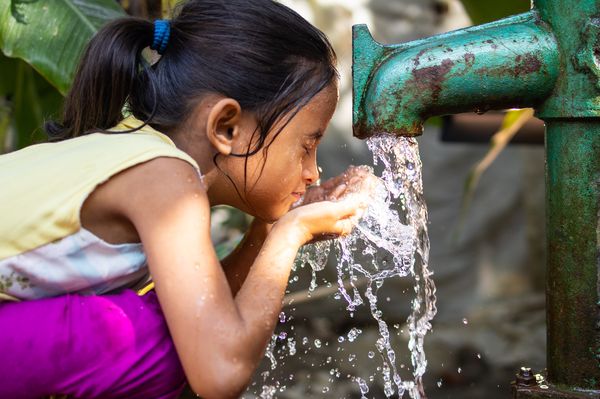
Child drinking water in Bangladesh

The Water Crisis Nobody Is Talking About Loudly Enough

This is not a paradox. It is the result of arsenic contamination, flood-driven pollution, saltwater intrusion, and sanitation failures that together constitute one of the most serious and most underpublicised public health emergencies in the world.

Arsenic — The Silent Poison

The WHO describes the arsenic contamination of groundwater in Bangladesh as the largest mass poisoning of a population in history.

Over 20 million people in Bangladesh drink arsenic-contaminated water every single day. They drink it because it comes from tube wells that were installed to replace surface water sources that were contaminated with bacteria and faecal matter. The tube wells solved one problem and created another. And the other problem is killing people slowly, invisibly, and without the dramatic visibility of a flood or a cyclone.

Arsenic poisoning causes cancer of the skin, bladder, kidney, and lung. It causes cardiovascular disease. It causes peripheral neuropathy. It causes skin lesions that mark victims visibly and subject them to social stigma on top of physical suffering. It causes developmental damage in children that affects cognitive function permanently.

It does all of this slowly. Over years. Over decades. By the time the symptoms are visible the damage is already done.

Of the 64 districts of Bangladesh, 61 have been found to have arsenic contamination in groundwater above safe drinking limits. The crisis is not concentrated in one region. It is national.

Flooding and Drinking Water Contamination

Every year when Bangladesh floods, its water crisis compounds. Floodwater contaminates tube wells, open water sources, and sanitation facilities simultaneously. The result is an immediate surge in waterborne diseases including cholera, typhoid, hepatitis A, and diarrhoeal disease that kills tens of thousands of Bangladeshis every year, the majority of them children under five.

In the char lands and coastal belt, flooding is not an occasional emergency. It is a seasonal reality. Communities in these areas spend months every year without access to safe drinking water, managing the health consequences of contamination with almost no support.

Our Promise

The women of Dacope walked two hours every day for safe water.

Two hours every day. Every day. In flood season. In cyclone season. In the dark.

Not because they chose to. Because there was no other option.

DIHAN Foundation will not stop until every community in Bangladesh has safe drinking water close enough to drink without sacrifice, clean enough to drink without consequence, and reliable enough to drink without fear.

Because water is not a development indicator. It is not a programme output. It is not a metric on a logframe.

It is life. And every person in Bangladesh has the right to it.

Their Fight. Our Foundation.
Our Numbers

  • 20M+ People drinking arsenic-contaminated water daily in Bangladesh (WHO)
  • 61 of 64 districts with groundwater arsenic above safe limits (UNICEF)
  • Millions of Bangladeshis without access to safe sanitation (UNICEF)
  • Tens of thousands die from waterborne disease every year (OCHA)
  • Hours women and girls spend daily collecting water in water-scarce communities (UN Women)
  • 64 districts covered by DIHAN water and sanitation networks
DIHAN FOUNDATION

Our Programmes

Delivering safe water, sanitation, hygiene education and arsenic response programmes across Bangladesh's most vulnerable communities.

Arsenic Testing and Safe Water Access

Community-level arsenic testing, contaminated source identification, deep tube wells, rainwater harvesting and water treatment solutions to ensure every household gains access to safe drinking water.

Safe Drinking Water for Rural Communities

Installation, maintenance and monitoring of safe water infrastructure in underserved rural areas with priority given to communities facing severe contamination and limited alternatives.

Coastal Belt Fresh Water Programme

Fresh water solutions for saline-affected coastal communities, including rainwater harvesting systems, pond sand filters and community-managed treatment facilities.

Char Land Water and Sanitation

Specially designed portable water treatment, rainwater harvesting and mobile sanitation solutions for vulnerable char land communities.

Flood Emergency Water Response

Emergency water purification, safe water distribution, tube well rehabilitation and community training during and after flooding.

Sanitation Improvement Programme

Community-led sanitation projects focused on eliminating open defecation and improving long-term hygiene and environmental safety.

Hygiene Education & Behaviour Change

Education on handwashing, food hygiene, menstrual hygiene and safe water storage to improve long-term public health outcomes.

Arsenic Health Response

Medical referrals, health monitoring and support for arsenic-affected individuals in partnership with healthcare programmes.

School Water and Sanitation

Safe drinking water facilities, gender-separated sanitation and hygiene education programmes for schools across Bangladesh.

Women and Water

Reducing the burden of water collection on women and girls while promoting gender equality through improved local water access.

Community Water Management Training

Building local technical capacity through community water management committees that can maintain and operate water infrastructure.

Chittagong Hill Tracts Water Programme

Dedicated WASH programmes designed with indigenous communities, addressing unique geographical and environmental challenges.

A Community's Story

Based on documented water crisis cases in rural and coastal Bangladesh recorded by WHO, UNICEF and WaterAid.

The village of Dacope in Khulna district sits in the coastal belt of southwestern Bangladesh, in the shadow of the Sundarbans.

For generations the families of Dacope drank from tube wells that reached the groundwater beneath their feet. The water was there. It was accessible. It seemed safe.

Then the testing began.

The arsenic levels in Dacope's groundwater were found to be among the highest recorded in Bangladesh, many times above the WHO safe drinking limit. Families who had been drinking from the same tube wells for twenty years had been slowly poisoning themselves and their children without knowing it.

At the same time, rising sea levels and cyclone damage to embankments were pushing saltwater into the fresh water sources that remained. What was not contaminated with arsenic was becoming too saline to drink.

Women in Dacope began walking two hours each way to reach a safe water source. They did this every day. In monsoon season they did it in flood conditions. In cyclone season they did it in wind and rain.

The children of Dacope have among the highest rates of arsenic-related skin lesions in the district. Several adults have been diagnosed with arsenic-related cancers in recent years.

Dacope is not exceptional.

There are hundreds of communities like it along Bangladesh's coastal belt, in its river deltas, in its char lands, and across its rural districts. Communities that have been drinking unsafe water for so long that the damage has become the background of ordinary life.

These are the communities DIHAN Foundation is building its clean water programmes to serve.